
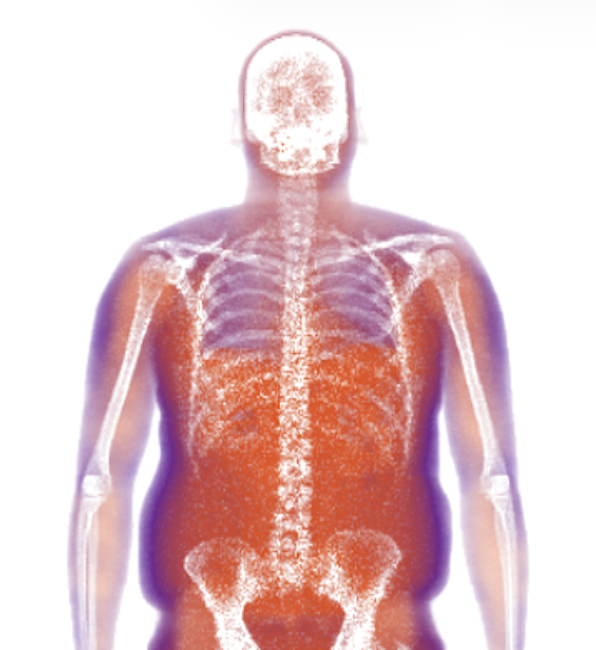
I wasn't expecting to be thrilled with the results of my DEXA scan, but I wasn't quite prepared for just how far below my expectations it was. The number that stopped me wasn't my body fat percentage, it was the 1.83 lbs of visceral fat sitting around my organs.
What is a DEXA scan
Unlike the trusty bathroom scale, a BMI estimate, or any other estimate of health based on weight, a DEXA scan uses two x-rays to measure fat, lean tissue, and bone density. It's often considered the gold standard in measurement because of its accuracy. For Exposure, this was the first baseline I wanted to get done so that we could measure not only overall weight change, but particularly how my lean muscle mass responded to training and exposure as I transform my body for endurance sports.
For my DEXA scan I used BodySpec — they operate in a growing number of US cities with straightforward flat pricing and no upsells. If you're looking to get your own baseline scan, I'd recommend them. If you use my referral link you'll get a discount on your first scan.
My DEXA Results
Here's everything the scan revealed. You can also always find these laid out in The Numbers.
These numbers paint a picture alone, but worth diving into a few. Overall body fat at 35% is a first major obstacle. While varying levels of body fat are healthy depending on age and gender, at 35%, a 32 year old man is squarely in an unhealthy group. While that number was higher than I expected, the visceral fat is what really gave me a shock.
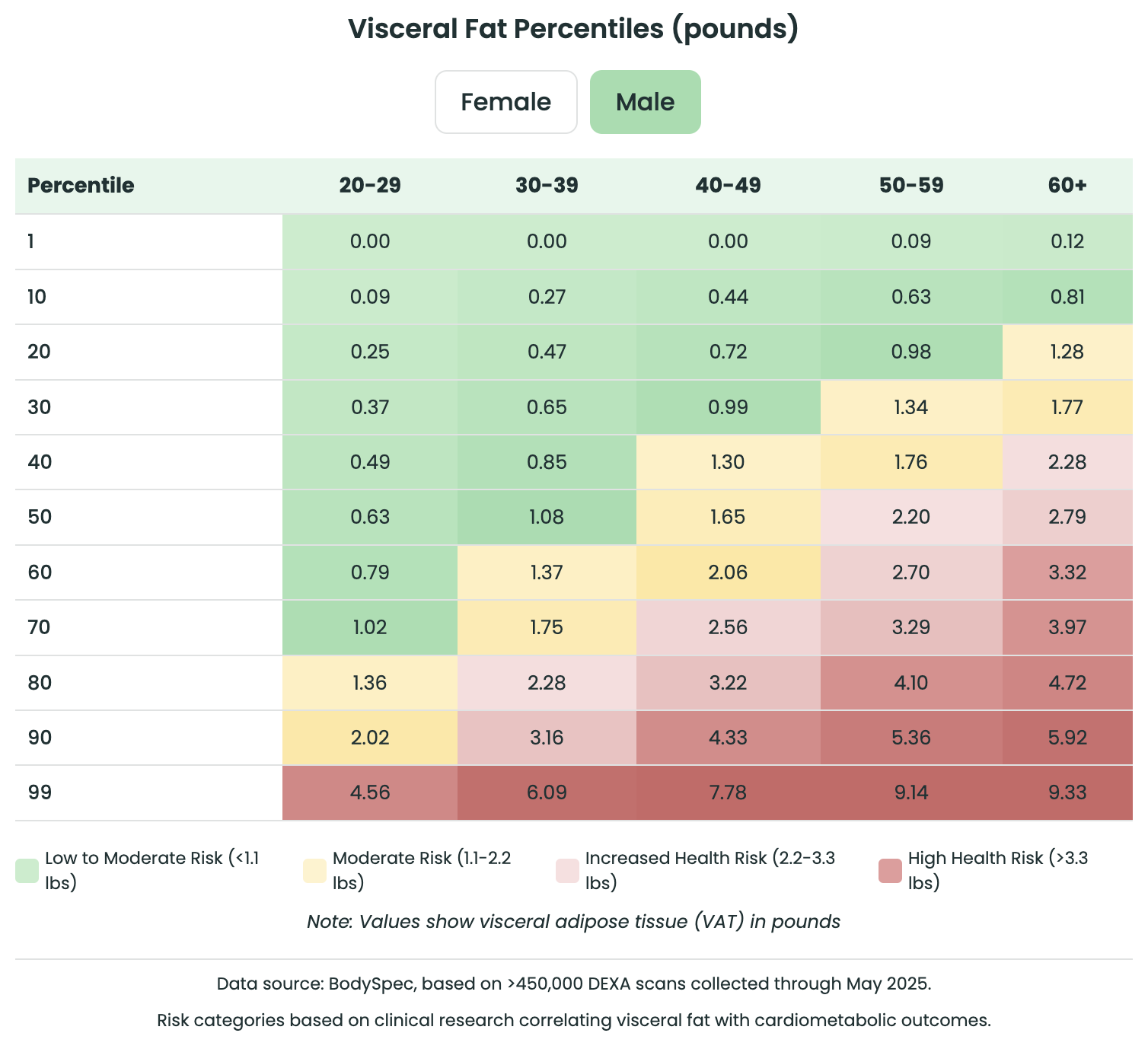
Visceral fat is the fat lining our abdominal wall and surrounding organs. Unlike subcutaneous fat, visceral fat directly drives insulin resistance, systemic inflammation, and cardiovascular risk in ways that fat you can pinch simply doesn't. Below is a chart from BodySpec showing averages for men of my age. While not the worst, at 1.83 lbs I find myself in roughly the 75th percentile of my age group and at increased risk. My overall weight and fat aside, this is the number that keeps me up at night as I think about my long term health.
One positive result from the DEXA was my lean muscle mass. At 127.5 lbs, I've got a solid base to start with. The program I've designed will work to maintain and even grow this number while significantly reducing body fat. A silver lining of my starting point is that at 35% body fat, my body has a significant energy reserve that can be drawn upon to increase muscle growth, even in a caloric deficit - something much harder to accomplish when down at target levels of sub 20% body fat.
What I'm doing about it
My biggest takeaways from the DEXA scan are the following: My body fat percentage is too high - I'd like to be sub-20%. My visceral fat puts me in a category where I'm at risk of developing cardiovascular, diabetic, and inflammatory conditions that will dramatically affect my life expectancy and quality of life. And finally, my lean mass, while a bit of light in darkness for me, is miles (and pounds) away from a condition that will carry me through physical trials I plan to put my body through.
In any program, the two main factors are going to be nutrition and training.
Nutrition:
I'll be operating at a calorie deficit aimed at losing roughly 1lb/week. at 3500 calories/lb of fat, this evens out to roughly a 500 calorie deficit per day. At my 127.5 lbs of lean mass, estimates show me burning anywhere from 1600 to 1800 calories per day at rest. Given my training and base calorie burn, I've set my goal for daily calories at 1800calories/day. This base number will be updated after my VO2 Max test with a true RMR (resting metabolic rate) measurement.
While calories determine how much weight I'll lose from a deficit perspective alone, not all calories are created equal. To maintain and build muscle during this program, I'll need roughly 0.8-1g of protein per pound of lean body mass - roughly 130g/day. Dietary fat is essential for hormone production and vitamin absorption - with a floor of 40g/day, but a target of higher. Carbohydrates, what gets converted into glycogen to fuel our muscles and brain, has a floor of 100g. These together add up to only 1300 calories. Those last 500 calories will be filled with carbs and fats as needed for the days activities.
I've focused heavily on calories and macronutrients here, but diet is so much more than just those two categories. Supporting our diverse gut microbiome, combatting inflammatory diseases and colon cancer through our food, and building up and healing our cardiovascular system are just a few examples of how food choices affect our lives. As we go I'll share specifics on how I'm using food to support these processes.
Training:
For the first twelve weeks, the focus is on rebuilding my aerobic base and rebuilding strength fundamentals in my joints and tendons. This will be done via a combination of high volumes of zone 2 cardio training combined with three weekly weightlifting sessions focused on heavy, compound functional lifts.
Zone 2 heart rate training is the primary builder of aerobic capacity. While the effort feels minimal, in this zone important physiological changes occur. It generates new mitochondria, increases blood vessels, oxidizes fat, and builds additional slow twitch muscle fiber critical to endurance.
Heavy compound lifts are responsible for strengthening and building connective tissues like tendons and ligaments, recruit major muscle groups to work together, strengthen the posterior chain responsible for making me run and swim faster and better, and build fast twitch muscle density responsible for pushing through that sprint against current in a long swim, or push up that hill at the end of a long run.
More on both training and nutrition to come in future posts.
The 6 month targets
In November I'll be back in the same BodySpec location, same protocol, same unfiltered results. The goal is below 180 lbs total, 130+ lbs lean mass, 26% or lower body fat, and visceral fat roughly halved. These numbers are specific because vague goals produce vague results, and aggressive because the protocol I've designed demands it.
Everything will continue to live on The Numbers page - follow along and see how close I can get and what improvements I can make. The numbers don't lie, and neither will the retest.