This is Exposure
To be clear - I'm not starting from the strongest position. We'll get into specifics later, but suffice it to say my body composition, general fitness, and blood tests do not reflect those of a person in peak condition. This is where I'm at, and I'm documenting and publishing this now because the alternative - waiting till I'm in the shape I'd like to be - defeats the purpose of this experiment.
This blog is called Exposure for a few reasons.
Exposure to cold and heat - a key training methodology I'm building around. Cold and heat exposure have a growing body of research behind them for metabolic adaptation, cardiovascular health, and recovery. Deliberate cold immersion isn't suffering for its own sake, rather a calculated stimulus that forces the body to adapt in ways conventional traning alone may not.
Exposure to and of honest data. Every number you see is real - the body composition, the blood numbers, the physical numbers - all is published at baseline and updated every 6 months on the journey. No sanitizing, no waiting till I'm less embarrased of the numbers.
Exposure to my own limits. There was a time I was a fairly high performing athlete, but that was about 15 years, a lot of pounds, and a lot of injuries ago. The body I'm in now can't achieve 10% of what I used to be able to. I don't know my limits anymore, but I intend to find out.
What I'm building toward
The short version: I'm attempting to transform my current self that can barely run a mile in Zone 2 without having to walk a significant portion to an endurance athlete capable of things I've only ever been able to watch people do and dream of myself.
The next twelve months are structured around three things: an Escape from Alcatraz swim in San Francisco Bay, a full marathon, and my first real long open water swim. These aren't soft goals. They have dates, registration deadlines, and cold water that doesn't care how prepared I am.
What comes after that I'm keeping off the page for now. Not to be coy, I just genuinely don't know yet if my body is capable of what I'm thinking. The first milestones will tell me. If they go the way I'm planning, what follows will be worth writing about.
The baseline data
Before I begin, I need to know exactly where I'm starting from. Getting a solid set of data to baseline my journey is what will tell us if my program is making the meaningful changes this is all for. Throughout this process, I'll be sharing all the data with you. Below is what you can expect to find - and you can always see all my measurements in The Numbers.
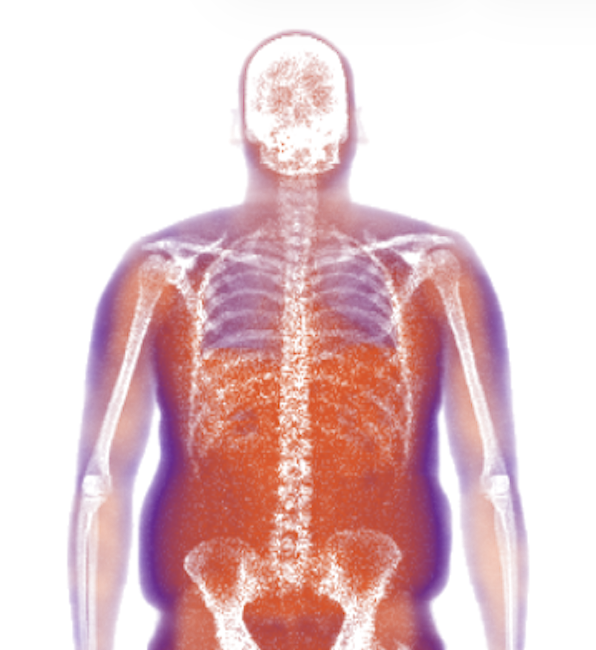
Body Composition via DEXA Scan - the gold standard of body composition measurement. We're measuring body fat, lean mass, visceral fat, bone density, and regional fat distribution. Not simply a scale, tape, measure, or impedance guesses, but about the closest measure we can get to true composition.
Fitness Testing via VO2 max and RMR lab tests - we'll use this to measure my true aerobic cieling, resting metabolic rate, lactate threshold, and establish my HR zones used to govern my training. I'll also be taking baseline running measurements for speed and aerobic capacity.
Blood panel via Function Health - this is a comprehensive twice annual draw that will cover my cardiovascular health, metabolic health, liver function, hormone levels, inflammation markers, and biological age. These panels go far beyond what's typically done in your annual physical.
How training starts from zero
There are right and wrong ways to build fitness when starting from a very low level like I am. The wrong way is what I tend to do every January - go too hard, too fast, fatigue, injure, quit four to six weeks in. The right way is a lot more boring. Its slower, less satisfying in the short term, but a lot more effective over twelve months.
The foundation is Zone 2 cardio. Zone 2 — sustained aerobic effort at 60-70% of heart rate reserve — is what builds a large aerobic base. Think of it as expanding the gas tank so you can perform at higher levels, for longer, without falling apart. Right now my tank is small.
For someone of my fitness level, the protocol calls for 150-180 minutes of zone 2 training weekly. It's not about speed, it's not about ego, it's about staying in that zone. Believe me when I say its humbling to have to walk up a small hill with your heart rate climbing into high exertion while people easily jog past you - but this is where I'm at right now. It also calls for 3 sessions of compound strength training weekly - push, pull, and lower compound lifts - to preserve and hopefully build lean mass while losing weight and building endurance.
Cold exposure starts from the beginning. Adaptation to cold is a slow process, no acceleration will happen by waiting. Daily cold showers, building in duration and temperature, Bay swims in cold water as my body allows, and cold plunges at set temperatures. We'll measure cold tolerance over time with a fixed temperature exposure limit at 50°F.
This isn't quite walking before running, yet - more like we're crawling before walking.
What you'll see here
Exposure is organized around a few recurring themes, and it's worth elaborating what it is and isn't.
You won't get: daily training logs, complete nutrition logs, or much of what you'd expect out of a traditional fitness plan.
What you will get is a documented process of a deliberate and data-driven transformation I'm attempting for myself.
The science: I'm no scientist, but most of what I'm doing has a physiological reasoning behind it and either strong data or emerging studies to back it up. Cold exposure and its metabolic effects, HR Zone training effects, blood markers and cardiovasular risks - I'll be writing on the lived experience and the research behind these protocols as we go.
Training worth writing about: Not every session, just the ones that mean something. The first run I complete fully in Zone 2 without walking. The first open water swim that scares me. A lift that surprises me. The sessions where something actually changes.
Data updates: Every 6 months I'll redo most tests, and each year I'll redo all of them. We'll directly compare them to the baseline and prior tests, figure out what we can do to move the needle in the coming 6 months.
Gear and why it matters: the tools I use, why I chose them, and whether they're actually worth it. One rule - I only write about things I own, use, and have a real opinion on.
Why document it
There's no shortage of good fitness content out there - great workouts, training plans, diet plans, etc. What I don't often see is the full journey starting from a bad spot. Most transformation content I see out there begins after the hard part is done, hindsight putting a different filter on the reality of the process.
I wanted to read something that started from the beginning without a known ending - so I'm writing one instead.
One more thing
I have what you might call an impostor syndrome. I'm not an athlete, a physiologist, or a trainer. I don't feel like I have any business writing about cold water marathon swimming, distance running, body transformations. The gap between where I am and where I want to be is genuinely massive.
That said, I've come to believe that's exactly the reason to document this. Starting as a person that would describe themself as underfit and overweight, employing a data-driven protocol and measuring it throughout, and seeing how far I can go is exactly the story I want to read the ending of.
That's the plan anyway - welcome to Exposure.